
What is skin fungus?
Skin fungus (dermatophytosis) is a fungal infection of the skin that appears as red, flaking patches, often ring-shaped, with a more pronounced, spreading edge and a clearer centre. The patches itch and spread. The fungus can affect the body, groin, feet or scalp and is easily passed on through contact.
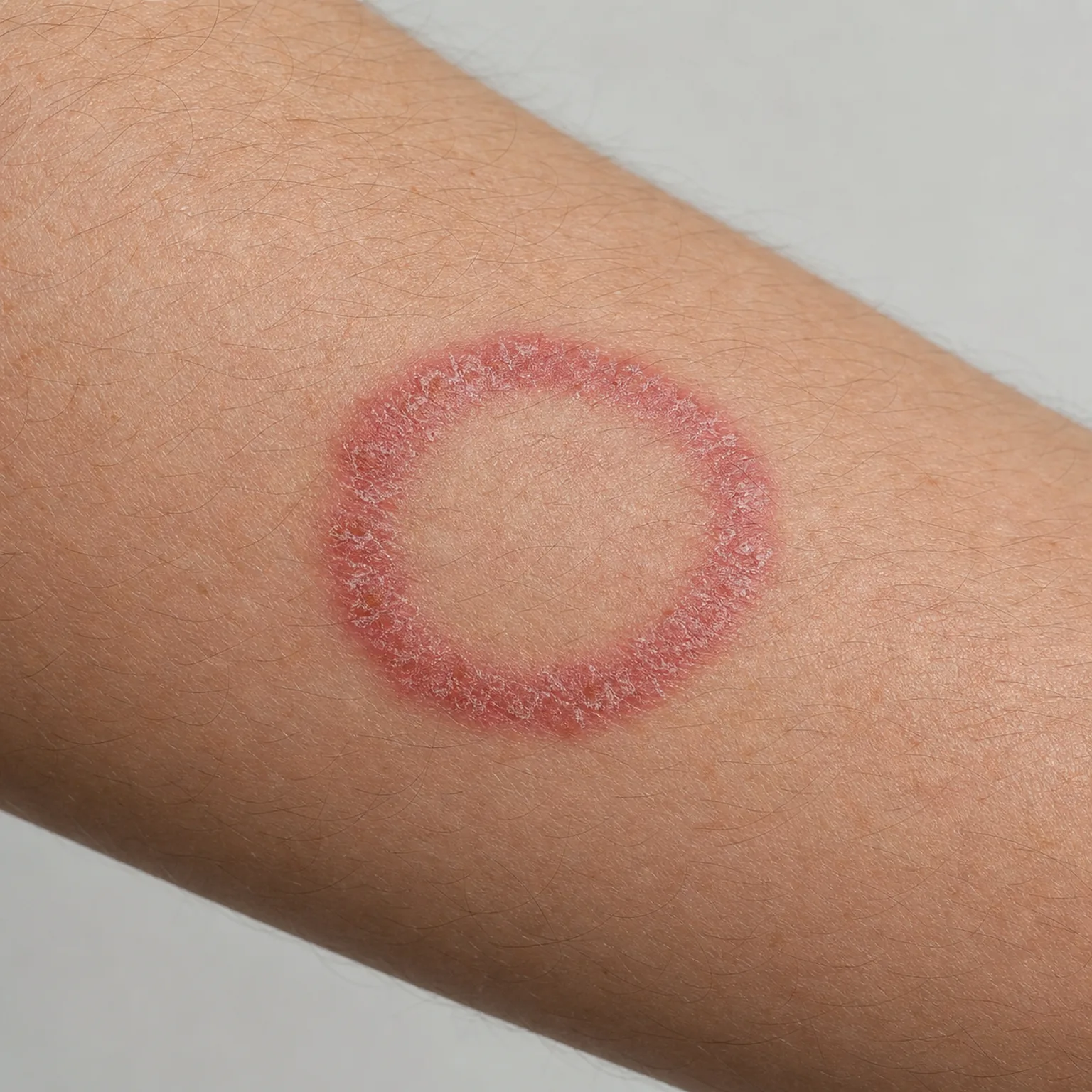
Common signs
How it's caught and what raises the risk
An accurate diagnosis matters, because a fungal infection is easy to mistake for eczema or other rashes - and the wrong treatment (especially steroid creams) only masks it and makes it worse.

Contact with another person
The fungus spreads through direct skin contact and shared items - towels, clothing or bedding.

Animals
Cats, dogs and other animals often pass skin fungus on to people, especially children.

Moisture and sweating
Warmth and moisture in skin folds encourage the fungus to multiply and spread.

Shared spaces
Gyms, swimming pools, saunas and changing rooms are common places to catch an infection.
How we treat skin fungus
Treatment is chosen according to where the infection is and how widespread it is. First we accurately establish what we're dealing with - and only then do we choose the most effective antifungal approach.
A fungal infection is easy to mistake for eczema or psoriasis. An accurate dermatologist's assessment protects you from the wrong treatment, which only makes the condition worse.
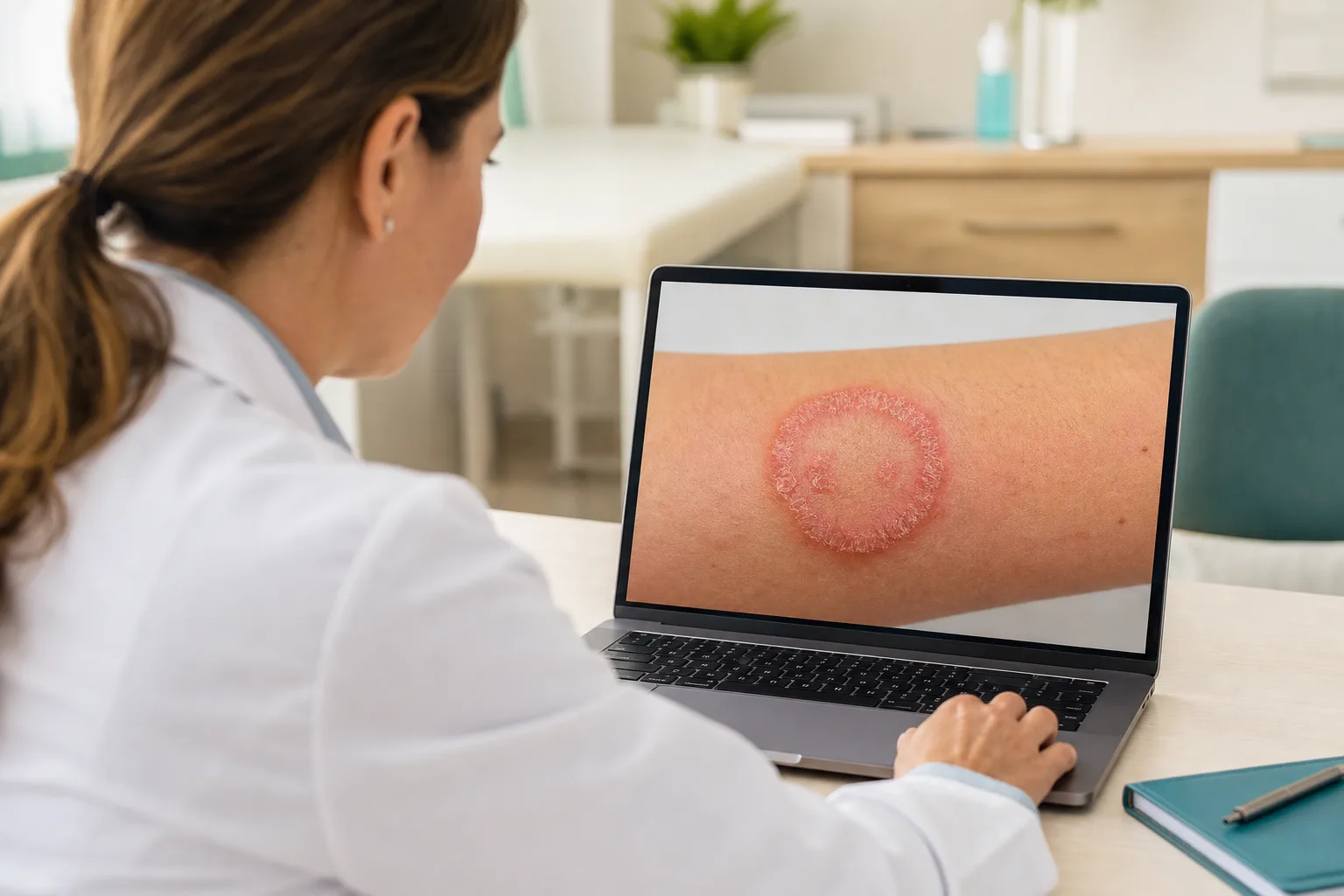
How treatment works
The dermatologist assesses the rash from photos and tells the fungus apart from other skin conditions.
In unclear cases we refer you for a microscopy test to confirm the fungus.
Prescription topical antifungal treatments for 2-4 weeks.
For widespread or resistant infection, prescription oral antifungal treatment.
Advice on hygiene, clothing and your surroundings so the infection doesn't recur or spread.
iThe iDerma advantage
Experienced skin specialists
Our team is made up of doctors who diagnose and treat a wide range of infectious skin conditions every day.

A fast assessment
You receive a rash assessment and treatment plan within 24 hours, with no long waits to see a dermatologist.

A treatment plan if needed
Once a fungal infection is confirmed, the dermatologist issues a prescription treatment directly and remotely.

Confidential and secure
Your rash photos and personal data are handled securely and confidentially.

Money-back guarantee
If we are unable to provide the consultation remotely, we refund you 100%.

Treatment from home
You fill in a form, attach photos of the rash and start treatment without leaving home.
Doctors, treating skin fungus
"Professionalism, clear communication and attention to every detail - exactly what we expect from every consultation."
About usService pricing
Initial dermatologist consultation
49,00 €Follow-up consultation
A later visit for the same conditionAny follow-up questions straight after your consultation are free. A repeat consultation is only needed when your condition is being reassessed.
With a 100% money-back guarantee if we are unable to provide the consultation remotely.
Frequently asked questions
1. Does skin fungus go away on its own?
Usually not. A fungal infection spreads and grows, so targeted antifungal treatment is needed.
2. How can you tell fungus apart from eczema?
It can be tricky - both cause redness and flaking. A dermatologist assesses the signs and, if needed, orders a test for an accurate diagnosis.
3. Is skin fungus contagious?
Yes, it spreads easily through skin contact, shared items and from animals.
4. How long does it take to clear skin fungus?
In most cases topical treatment takes 2-4 weeks; a more widespread infection may need longer or oral treatment.
5. Can it be treated remotely?
Yes. The dermatologist assesses the rash from photos and prescribes treatment remotely.
6. How much does a consultation cost?
An initial dermatologist consultation at iDerma costs 49 €, backed by a 100% money-back guarantee.